Miles's school scandal
The Turn of the ScrewMiles’s school scandal is the unexplained offense behind his expulsion, recalled in fragments during his final bedroom confrontation with the Governess. He denies stealing and eventually admits that he said things to a few boys he liked; those boys repeated his words until they reached the masters. The content remains unnamed, leaving a consequential gap between the fact of his expulsion and any confident judgment of what he did.
The offense and its disclosure
The Governess raises the school scandal after Miles tells her that he has burned the letter she had been writing. She asks whether this is what he did at school, then tests the possibility that he took letters or other things. Miles seems to consider the question almost as though the thought of stealing has only just reached him, and asks whether he stole. He answers plainly that he did not.
That denial redirects the interrogation from theft to speech. When the Governess asks what he did, Miles draws breath repeatedly and says that he said things. His explanation is spare, and the Governess presses him to account for why the school considered it sufficient grounds to turn him out. Miles offers only that he supposes he ought not to have said them. The scene establishes the existence and consequence of the offense without supplying its words.
What the school learned
Miles cannot say to whom he spoke. Asked whether he said it to everyone, he replies that it was only to a few, then says that he does not remember their names. He does remember the relevant distinction: they were boys he liked. Their closeness makes the episode more specific than indiscriminate misbehavior, but the evidence does not identify the boys or explain what was said to them.
He confirms that those boys repeated his words and that the repetition carried them to the masters. Miles says he did not know they would tell. The sequence therefore runs from private speech among a small circle, through repetition by its recipients, to the school authorities; the scandal rests not only on Miles’s words but on how they traveled. Neither Miles nor the Governess recovers the words themselves, so the breach is described through its route and institutional consequence rather than its content.
The Governess’s interpretation
The Governess’s questioning seeks to connect the expulsion to an identifiable act. As Miles yields details, she initially experiences the exchange as a victory, but his incomplete recollection unsettles that confidence. His inability to remember the names of the boys, and his apparently genuine uncertainty about the offense, make her consider that he may be innocent. That possibility threatens the interpretation on which her interrogation has depended: if his school scandal does not prove the corruption she suspects, her own certainty about him and the haunting is thrown into doubt.
Miles’s description of the boys as those he liked intensifies the uncertainty. It suggests that the words were spoken within a circle of chosen companions, while offering no measure of their seriousness. He says that the masters learned of them, but did not know that the boys would report them. His remorse is expressed as a broad sense that he ought not to have spoken and that it was too bad; no precise recollection or confession of particular words follows.
An incomplete confession at the climax
The school scandal is disclosed not in a separate account of the expulsion but under the pressure of the Governess’s present questioning. Miles’s speech arrives in short, hesitant stages: he did not steal; he said things; they were enough; only a few boys heard them; the boys repeated them; the masters learned of them. This incremental form supplies the basic chain of events while withholding the central item—the words themselves. The gap is not repaired before the scene breaks off.
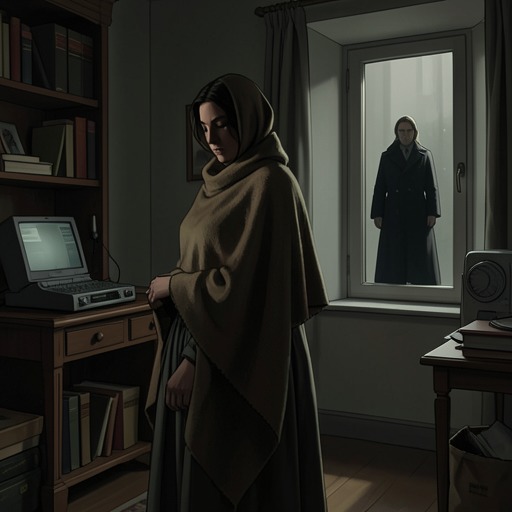
When the Governess demands to know exactly what he said, the narration shifts immediately to her perception of the white face at the window. She springs toward Miles and tries to hold him against her, turning from the unfinished inquiry to the apparition she identifies as the source of their misery. The interruption prevents a fuller account of the school scandal at the very moment she presses hardest for it. Thus the episode helps explain Miles’s exclusion but does not settle what his offense meant, how grave it was, or whether the Governess’s reading of his condition is justified. Its unresolved content preserves the story’s central uncertainty even as the route to the school’s decision becomes clear.